

Skills and Classes
On Moon Isle every penguin can grow in four class skills: Melee with two-handed weapons, Ranged with bows and crossbows, Magic with wands and staffs, and Crafting at the Crafting Hall’s benches. You train them with a hired trainer, on the practice grounds and in fights, and the one you push furthest can become your class.
 Ice ShortbowMoonstone Longbow
 Aurora Crossbow
 Driftwood Wand
 Moonglass Wand
 Starfall Wand
 Stormhide Armour
 Hatchet
 Ore Pick
Your class skills
The Skills and Classes button on the toolbar opens your stats card. It shows the four class skills with their share in percent, what each gives you and costs you right now, how much you can still gain today (and how much of that came from fights and from practice games), and your class once you have one.
- All four share one budget. Once it is full, every new point comes off the other class skills in equal parts. So a penguin that does everything ends up good at nothing in particular, and one that trains a single class skill gets very far in it.
- Two skills trained evenly show about 40% each, three about 24%, one alone can reach 100%.
- Each class skill has a daily limit (counted in UTC days) that every source of points shares: orders, practice games, fights and crafting. The further along you are, the smaller the limit and the slower the gains: reaching 50% takes about four weeks of daily training, 100% about two months.
- Steady: each class skill has a Steady switch on the card. A steady one gains nothing, so you can keep it where it is while you train another.
- Your combat skills (Attack, Strength, Defence, Hitpoints) and combat level (see Your combat stats) stay exactly as they are: class skills are an extra layer on top. Combat skills have levels, class skills a share in percent.
What each class skill gives and costs
Every class skill helps you one way and costs you a little another way, growing with its share:
| Class skill | Gives you, at 100% | Costs you, at 100% |
|---|---|---|
| Melee | +20 strength | 10% slower walking |
| Ranged | +10% precision with a bow or crossbow | −20 defence |
| Magic | +10% ward | hitpoints come back half as fast |
| Crafting | 30% less wear on your gear | −20 attack |
Classes
The first class skill to reach 50% gives you its class, for good: it can’t be reset or changed. The stats card and a message warn you at 45%, so set the others to Steady in time if you’d rather not. From then on that skill never drops below 50%, and its title shows under your name: “Pingu · Mage”.
| Class skill | Class | Perk |
|---|---|---|
| Melee | Brute | a creature’s stun holds you a little shorter, and your heavy weapons wear 20% slower |
| Ranged | Archer | 30% chance a shot keeps its arrow or bolt in the quiver |
| Magic | Mage | wands and staffs freeze or stun a little more often, and a creature can be held again sooner; brews the Stillwater Draught |
| Crafting | Crafter | sometimes a crafted piece needs one material less; the smith repairs your own crafted pieces for less |
Past 50% your class grows into a mastery, in full at 100%: Archers dodge 4% more, Mages 3%, Brutes hit 5% more precisely with a two-handed weapon, and a Crafter’s pieces sometimes come out one quality grade better.
What trains which skill
Your weapon decides which class skill a fight trains, and only some weapons train one at all:
| Weapon in hand | Trains |
|---|---|
| Two-handed weapons (axes, hammers and the other two-handers) | Melee |
| Bows and crossbows | Ranged |
| Wands and staffs | Magic |
| One-handed weapons (swords, daggers, clubs, spears), bare flippers, harvest tools | nothing |
| Weapons from a LUNC Penguin’s gear (NFT weapons) | nothing |
A hit with a weapon that trains nothing gives no class points, and neither do orders or practice games for it. The weapon’s item card says which skill it trains. Melee needs a two-hander, so a sword-and-shield fighter has to pick one up to grow Melee.
Trainers and orders
Each combat class has an elder trainer you can hire at its practice ground: Sergeant Flint for Brute (Melee), the Fletcher for Archer (Ranged) and the Rune Keeper for Mage (Magic). There is no trainer for Crafting: you grow it at the Crafting Hall.
Click the trainer to open the training window; its Hire as your trainer section has one button per block of days:
| Block | You pay |
|---|---|
| 1 day | 1 day’s price |
| 3 days | 3 days’ price |
| 7 days | 6 days’ price (one day free) |
- A day costs 15 Krill below attack level 20, 35 from 20 to 39 and 75 from 40. The price is fixed when you hire.
- One trainer at a time. Hiring another class switches: the old hire ends and its unused whole days come back as Krill (the day under way and the free day are not refunded). Click Dismiss to end a hire yourself; it shows what you get back. A hire that simply runs out ends without a refund.
- A training weapon. While you have a trainer, they lend you a Training Greataxe, Training Shortbow or Training Wand to match your attack level. It trains its class like the real thing, never wears down and goes when the hire ends. An Archer’s hire also brings 100 practice arrows, which go back with it. The loan weapons have no special.
Your trainer walks over to you out in the world and offers a daily order. Click the trainer when a “!” shows over them: the order card has Take, Skip and, once an order is done, Turn in. You get one free skip per class a day, and the trainer comes back to pay you after you turn in. The Orders tracker on your screen follows the orders you have taken; click its title to fold it.
There are three orders a day, each paying points on top of the practice games and inside the day’s limit:
| Order | Pays | Brute | Archer | Mage |
|---|---|---|---|---|
| Easy | 30 points | Knock out 10 creatures | Land 80 shots | Land 80 bolts |
| Standard | 35 points | Land 60 blows on the creatures you fight most | Land 50 shots from 3 or more tiles away | Deal 300 to 1,400 damage from 3 or more tiles away, more at higher combat levels |
| Hard | 40 points | Knock out 6 creatures of your level or higher | Knock out 6 creatures of your level or higher with a named bow | Knock out 6 creatures of your level or higher |
- Orders are done in real fights with creatures. Under combat level 20 the counts are smaller (about 60%), except the Mage’s damage order.
- A hit only counts when the creature still teaches you most of what it could; creatures that you have long outgrown count for nothing. A knock-out counts when you did at least half of the damage.
- Orders use the weapon rules above: a one-handed weapon or an NFT weapon fills nothing.
- A new day (UTC) clears the orders and the first one of the day comes by a minute later.
The special bar
Every fighter has one special bar, named after the weapon in your hand: Rage with a two-handed melee weapon, Focus with a bow or crossbow, Mana with a wand or staff. Its round button is by the map (or press Q). You do not need a class for it, only 15% of the skill your weapon trains: below that you have no bar.
- The bar fills by itself, also while you are away, and never from kills or damage. A knock-out keeps what you had.
- Size and speed grow with the skill. At 15% the bar holds 100 and takes 4 minutes to fill 100; at 100% it holds 150 and takes 1 minute for 100. The size and speed come from the skill of the weapon you hold, and one bar is shared by all your weapons: swapping refunds nothing.
- A special costs 100. Press the button and your next swing or shot at a creature is the special one. Its cost goes as that swing resolves, whether it lands or not.
- An armed special fades after 10 seconds without a swing, or when you press again. It also drops when you change to another kind of weapon, are stunned or frozen, board a ride, are afloat, or get tagged for PvP. Specials never work against penguins.
- Which special you get depends on the weapon:
| Weapon | Bar | Special | What it does |
|---|---|---|---|
| Two-handed axes and the like | Rage | Cleave | also strikes up to two creatures beside your target, each up to 30% of your max hit |
| Two-handed hammers and the like | Rage | Crush | this swing and your next two at that creature roll against 80% of its defence |
| Shortbows | Focus | Volley | also looses an arrow at up to two creatures within two tiles of your target, each up to 30% of your max hit |
| Longbows | Focus | Piercing shot | the arrow flies on to the creature behind your target, up to 30% of your max hit |
| Crossbows | Focus | Pin | a landed bolt freezes the target for 2 seconds |
| Wands | Mana | Chain spark | the spark arcs on to up to two creatures beside your target, each up to 30% of your max hit |
| Staffs | Mana | Frost nova | a landed bolt freezes the target and up to two creatures beside it, for a shorter time than a Pin |
Bosses, elders and other strong creatures can’t be frozen, and a creature that was just frozen can’t be frozen again right away. The starter Driftwood weapons and one-handed weapons have no special. An extra arrow costs one arrow from your quiver.
The Mage’s Rime Ward
A Mage with Magic at 40% or more and a wand or staff in hand gets a second round button beside the special, the Rime Ward. It costs 100 of the Mana bar and raises a frost circle of two tiles round you for 15 seconds. You, your clanmates and your team inside it defend 20% better against creatures and against penguins who are not your allies. It can’t be cast afloat, while riding or while stunned or frozen.
Gaining points
Training grounds
Three small, safe islets lie off the Inn islet’s south side. Follow the Training Walk from the Inn’s bridge to reach them. Each has its trainer; click the trainer to walk over and open the training window.
- Brute Arena (Melee), Sergeant Flint.
- Archery Range (Ranged), the Fletcher.
- Mage Circle (Magic), the Rune Keeper.
The window’s title is the ground’s name and its trainer. Besides the Hire as your trainer section it offers three practice games; pick one and click Start a round. A round lasts a little over a minute, and the better your score, the more points. Walking away from the trainer ends the round, and you can’t start one in or just after a fight.
| Ground | Practice games |
|---|---|
| Brute Arena | Dummy drill: strike the mark on the dummy while it glows. Parry drill: block toward the side the blow comes from. Ice blocks: strike when the needle is in the crack. |
| Archery Range | Moving butts: shoot the sliding targets, mind the wind. Pop-up gallery: cut-outs pop up in three rows. Skeet: shoot clay discs ahead of their flight. |
| Mage Circle | Wisps and runes: touch the wisps and trace runes from the first stone to the last. Rune echo: repeat the sequence of stones. Beam channel: keep the beam on a wandering wisp. |
Practice games are an extra: they give at most a fifth of a class skill’s daily limit. Orders and fights are the main way to grow.
Fights, crafting and brewing
- Fights with creatures give points with the weapon’s own skill (see “What trains which skill”), as long as the creature still teaches you something. Fights can fill the whole daily limit; fights with other penguins give nothing. Standing around idle gives nothing either.
- Crafting at the Crafting Hall trains Crafting. Brewing potions trains Magic, up to a quarter of the daily limit. Gathering raw materials trains Crafting a little.
Bows, crossbows and wands
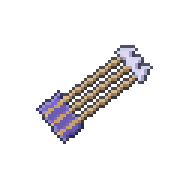 Quartz-tipped Arrows
- Shortbows are one-handed, so a shield or a torch can go with them. Longbows hit harder from further away, crossbows harder still but slower; both take both flippers.
- Bows and crossbows shoot from the quiver. The blacksmith sells driftwood arrows and bolts, 10 for 2 Krill; ore-tipped and quartz-tipped ones hit harder and are crafted. The quiver holds up to 200 of one kind and takes one of your ten carry places. Without the right ammo you can’t shoot, and the quiver chip says so.
- A bow aims worse at a creature right next to you; step back a tile or two. Crossbows don’t mind. Every ranged weapon aims best within its first few tiles and a little worse at its longest reach; the item card says how far.
- Wands come from the magician’s stand. They are one-handed and leave room for a torch, but not for a shield. The better wands may stun the creature they hit for a moment.
- The magician’s ice staffs reach one tile further.
- Bows, crossbows and wands need a share of their skill to be worn: 0% for the first tier, then 5%, 15%, 25% and 40% for the best. The magician’s staffs need 10%, 20% and 35% Magic. Two-handed axes and hammers need Melee by their tier, and the heaviest Starfall and dungeon armour 25% Melee. The item card shows what is needed. Some older pieces of yours need nothing (the item card says so), but a two-handed melee weapon always needs its Melee share.
- Shots and spells only land from where the creature could come after you: not from inside a safe zone, and not from across water or a cliff.
The Crafting Hall
The Crafting Hall is the tall house on the Inn islet’s square. Master Tinker stands before its door: click him to open the crafting window. You craft standing near the door.
- Recipes: Master Tinker sells them, from 25 Krill for the simplest to 1,500 for the best. Each needs a share of Crafting to make.
- Materials: spoils you carry (sinew, hides, feathers and the like) and your workshop’s resources (wood, stone, cotton, quartz, ore) from your igloo lot. Most recipes can be made from several sets of materials; pick the one you have.
- Making: choose how many (up to 10), and your penguin works at the bench, a few seconds a piece. Each piece costs a small bench fee in Krill. Walking away stops it; what’s made is kept.
- Components: the better recipes take parts such as bowstrings, ore ingots or wand cores, made at the benches first. You can queue a part and the piece that takes it together.
- Quality: crafted gear rolls a quality grade like dropped gear; skilled crafters never make Worn pieces.
- Inlays: a fine spoil can be set into a crafted bow, crossbow, wand or hide armour, for a little extra precision, dodge, speed or ward. How to set each one comes from a recipe scroll that strong creatures sometimes drop; Master Tinker reads it with you. A rarer scroll, Masterwork, lets you set two inlays in one piece.
- Crafted pieces carry their maker’s name, can be traded freely, and the walrus buys them for a fifth of their worth.
Gathering raw materials
Skilled crafters can gather their own materials. Wear the right tool in your weapon hand and click a node next to you:
| Node | Where | Tool | Crafting |
|---|---|---|---|
| Trees, cotton bushes, rocks | Lower Ring | Hatchet, Sickle, Stone Pick | 35% |
| Quartz veins | Upper Ring, near the bears | Quartz Chisel | 45% |
| Ore seams | Upper Ring, near the bears | Ore Pick | 50% |
- Your penguin works the node every few seconds and now and then finds a raw piece. Every minute or so a glint sparkles on the node: click it, or the work pauses.
- A node gives out after a while and grows back later. While you work one, nobody else can.
- Raw materials are yours alone: the benches use them before your workshop store, but they can’t be traded or sold, and you lose them if you are knocked out.
- There is a daily limit per account.
Potions
Mages brew potions at the Crafting Hall’s alembic. No recipe to buy: a share of Magic is enough. Some take reagents, which creatures sometimes drop: Venom Glands, Rime Shards and Stunstones.
| Potion | Magic | What it does |
|---|---|---|
| Healing Draught | 5% | heals a little every second for 8 seconds |
| Antidote | 5% | cures poison and keeps it off for a while |
| Poison Coating | 15% | coats the ammo in a quiver (see below) |
| Frost Ward Tonic | 15% | more frost ward for 3 minutes |
| Fire Ward Tonic | 25% | more fire ward for 3 minutes |
| Wayfare Draught | 25% | takes you to a spot you charged it with |
| Greater Healing | 40% | heals more, for 10 seconds |
| Keen-Eye Elixir | 40% | +3% precision for 2 minutes |
| Stillwater Draught | 50%, Mages only | ends a freeze, and none can hold you for a moment |
- Drink from the potion’s card or the potion chip. Healing potions share one cooldown, and they stop working once you are tagged for a fight with another penguin.
- One tonic or elixir works at a time; a new one replaces the old.
- A frozen penguin can only drink the Stillwater Draught, a stunned one nothing.
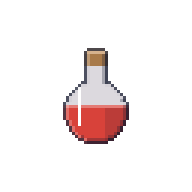 Healing Draught
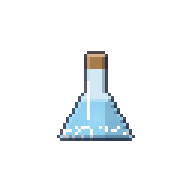 Frost Ward Tonic
 Stillwater Draught
 Wayfare Draught
 Rime Shard
 Bow Stave
 Starheart Core
 Masterwork scroll
Poison coating
A crafter with 15% Crafting can coat the ammo in their quiver with a Poison Coating at the Crafting Hall. One coating covers the next 25 arrows or bolts. A coated hit may poison the creature for a few small hits of damage. It never finishes a creature off, and the undead and poisonous creatures don’t take it.
The Wayfare Draught
Set a marker on your map and choose Charge a Wayfare Draught here: a potion you carry remembers the spot. Drink it later from its card and stand still for five seconds, and it takes you there. It works within one island (Moon Isle’s ground and rings count as one), never into or out of fights, PvP zones, dungeons or water, and only once every 10 minutes. If you trade a charged draught, its charge is gone.